



Japan’s infamous and eerie deserted island has been recognized by UNESCO as a World Cultural Heritage site. Achieving this required immense effort.
Japan is a country of stunning scenery, rich culture, and delicious cuisine, along with countless other attractions for tourists. Among them is a location off the coast of Nagasaki, once used as a setting for a James Bond film: the “ghost island” of Hashima – or Gunkanjima .
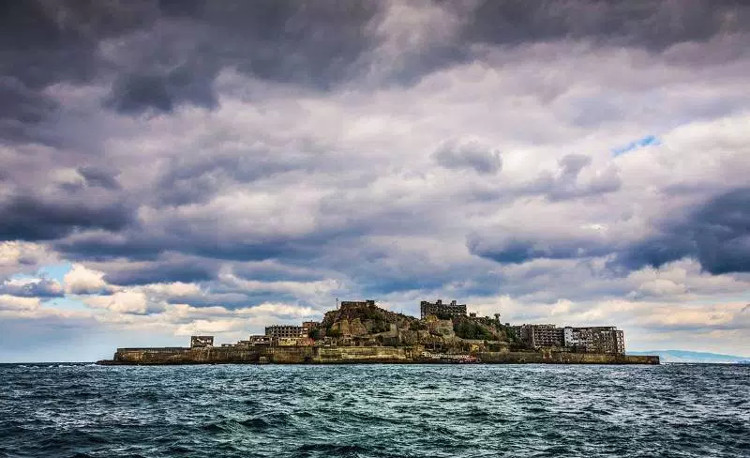
The ghost island has been recognized as a World Cultural Heritage site.
Many people have probably heard of this island, which is associated with mystery and enchantment. However, this very island was recognized as a UNESCO World Heritage Site in 2015. You’ll find out why below.
The island is associated with a historical period.
About 15km from Nagasaki lies an abandoned, uninhabited island shrouded in mystery. Hashima Island, once a hub for offshore coal mining, is a prime example of Japan’s rapid industrialization.
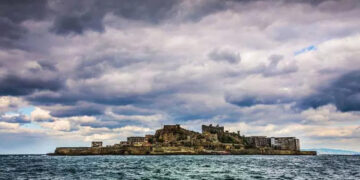
In fact, the island is also known as Gunkanjima (meaning Battleship Island) , so named because its shape closely resembles a Japanese battleship. Historically, Hashima Island officially operated as a coal mining base from 1887 until 1974.
However, as coal reserves began to dwindle and oil started to replace coal, the island was forced to close down and its inhabitants left.
Hashima Island was then largely ignored for nearly three decades. But as the abandoned concrete walls gradually crumbled over time and vegetation flourished, the dilapidated island began to attract the attention of those interested in preserving the integrity of historical sites.
After about 50 minutes by boat from Nagashaki pier heading southwest, one will see a towering “battleship” floating in the middle of the open sea.
The island’s unusual shape is due to the fact that it is an artificial island , created by the Mitsubishi corporation in 1887 with the purpose of being a high-quality coal mine on the seabed.
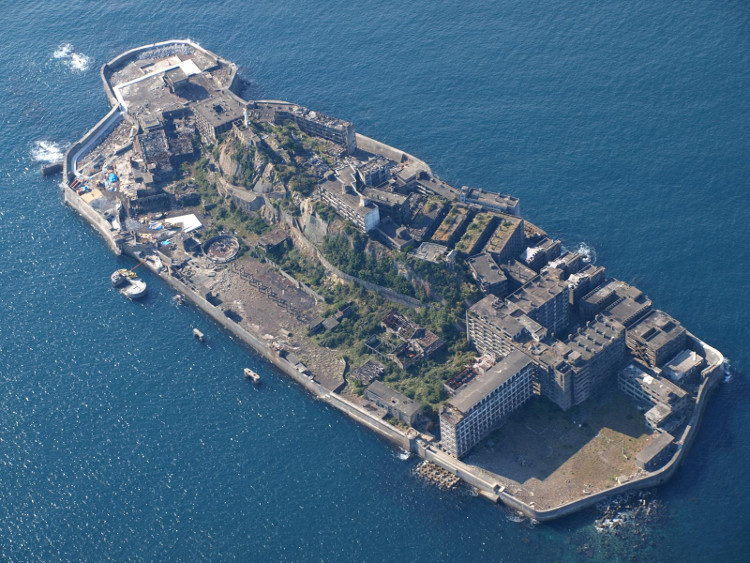
The island was once a symbol of industrialization.
During that period, Gunkanjima was the main fuel source for the giant Yawa steel mill, thus requiring a huge workforce. Although only 6.3 hectares in size, Gunkanjima housed 71 buildings, high-rises, and coal mining facilities.
At its peak in 1959, the island was once the most densely populated place in the world, so crowded that more than 5,000 people had to cram into a building with an area of about 0.16 square kilometers.
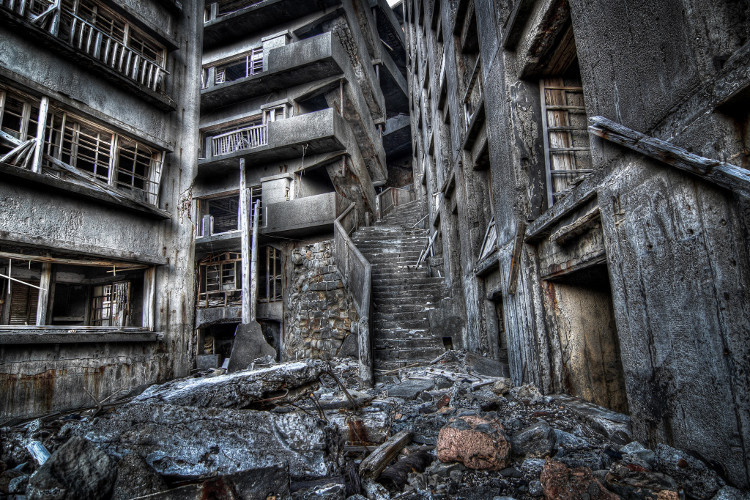
Now all that remains is a desolate pile of rubble.
Intended as a permanent settlement for workers, Gunkanjima Island lacks nothing, except… a cemetery. There are schools, playgrounds, gyms, movie theaters, bars, restaurants… and even temples and shrines.
However, in the late 1960s, the Japanese economy suddenly boomed with the influx of oil. Coal mines gradually fell into disuse, and by early 1974, Mitsubishi announced the closure of Gunkanjima Island.
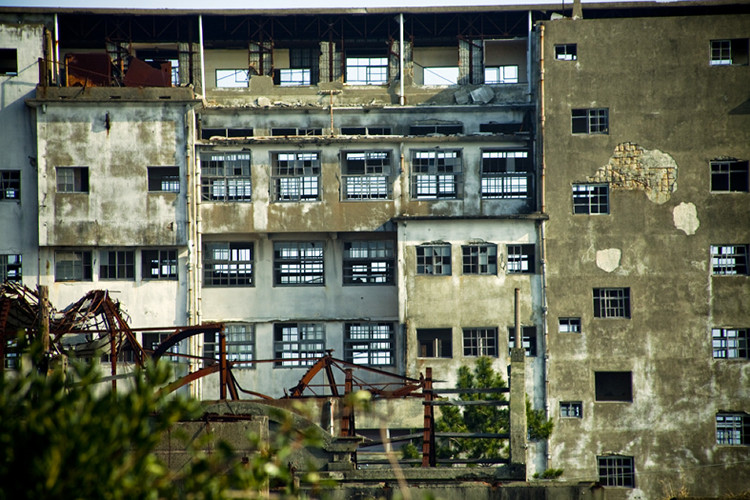
These ruins only appear in horror movies.
One day in mid-April 1974, when the last island residents boarded a boat to return to Nagasaki, the island was officially abandoned. Today, “ghost island” is the name most people remember when referring to this island.
An island of symbolic significance.
Before oil became the nation’s energy mainstay, coal was the primary fuel, and Gunkanjima is a significant symbol of that miraculous era of industrialization .
In 2001, Mitsubishi donated Hashima Island to the town of Takashima, which officially became part of Nagasaki in 2005.
Since that year, the city has begun a tourism promotion campaign for the island: allowing journalists to visit, restoring the pier for tourism purposes, and renovating some dilapidated areas. Buildings that are too old and unsafe are off-limits.
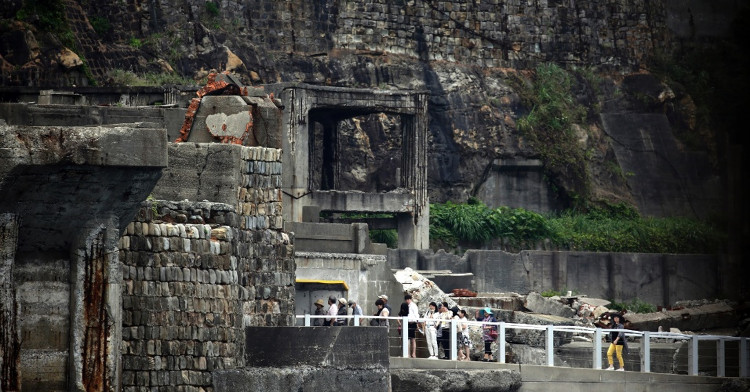
Tourists enjoy the atmosphere on the haunted island.
And then their efforts paid off. In July 2015, UNESCO officially recognized the “battleship” island as a World Heritage Site. This was well-deserved recognition for a place steeped in the history of the industrial and manufacturing era.
The world needs to know that Japan is a nation that is always innovating and creating technologically. This is also a way to encourage people to constantly explore and innovate, just as this country is doing.