



This discovery has been the subject of much controversy for over 30 years.
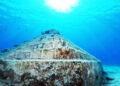
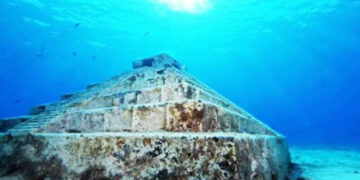
In 1985, while working underwater near Yonaguni Jima, a Japanese diver accidentally discovered a massive ancient stone structure. This stepped structure, with its carefully carved edges, closely resembled pyramids. It was subsequently named the Yonaguni Architectural Complex.
Scientists have yet to determine how the pyramids and steps at Yonaguni Monument, an architectural complex located off the coast of Yonaguni, Japan, were formed.
The origins of the Yonaguni Monument, an underwater architectural complex comprising stone steps and pyramids , located off the coast of Yonaguni, Ryukyu Islands, Japan, have been a subject of debate for many years.
The pyramids here are 27 meters tall and are made of sandstone and mudstone. They are believed to have formed at the end of the Ice Age, about 10,000 years ago, when this area was still above sea level.
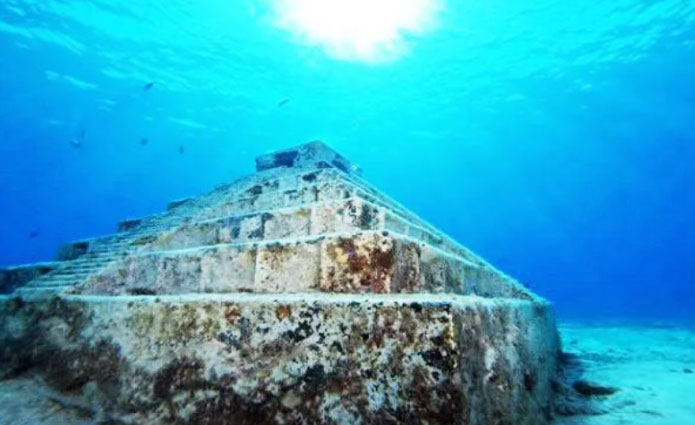
A diver accidentally discovered the remnants of a pyramid at the bottom of the Sea of Japan. (Photo: National Geographic).
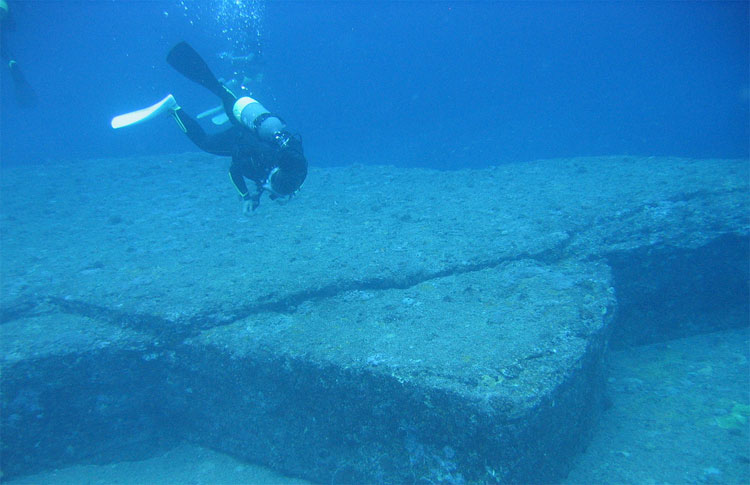
The structures here are made from intact blocks of solid rock.
Scientists have yet to explain how this city formed at the bottom of the Pacific Ocean. Many believe the pyramids are the work of extraterrestrial beings, while others argue they are man-made. Masaaki Kimura, a professor at Rykukyus University in Okinawa, Japan, asserts that Yonaguni Monument is the work of ancient people because it contains many man-made structures along with pottery, stone tools, and hearths.
However, geologist Robert Schoch argues that the structure was formed naturally. “I don’t believe any of the large structures or formations there are man-made steps; they’re all natural. They’re just layers of sandstone, with a tendency to fault along long planes, creating very straight edges, especially in areas with many faults and seismic activity,” he said.
Some experts believe that this underwater structure could be the remains of Mu, a legendary Pacific civilization that is said to have been submerged by the sea.
Later, divers discovered long roads, grand avenues, large staircases, arched gateways, and massive, precisely carved stone blocks. Ten other structures were found at Yonaguni, including a castle, five structures resembling temples, and something resembling a huge stadium. Interestingly, all these structures were connected by waterways and roads.
Scientists have yet to explain how this site formed at the bottom of the Pacific Ocean. How did this architectural complex disappear, and what happened to all the people who lived there? It has remained a subject of debate for over 30 years.