



The United Nations Educational, Scientific and Cultural Organization (UNESCO) recognized the Ajanta Caves in India as a World Heritage Site in 1983.
Ajanta Caves – A World Heritage Site in India
The Ajanta Caves are one of the greatest surviving Buddhist heritage sites. Hidden deep within the wild jungles of the Deccan plateau in India, these caves were completely forgotten for a very long time.
In 1819, a group of British men on a hunting trip in the area accidentally discovered the Ajanta cave system. The Ajanta cave complex can be considered a valuable monument representing the flourishing period of Buddhism in India.
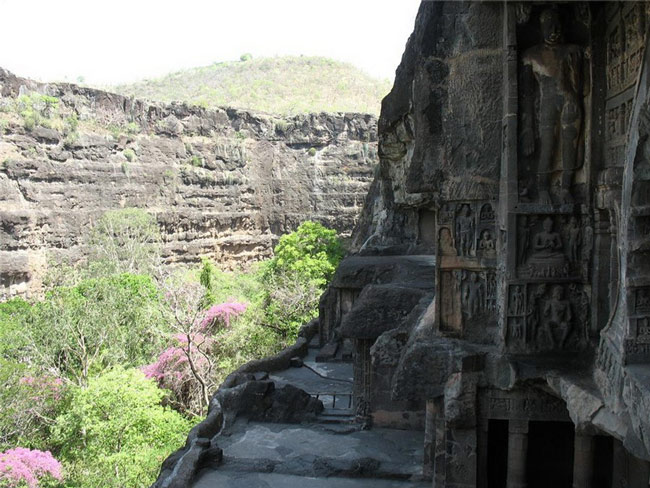
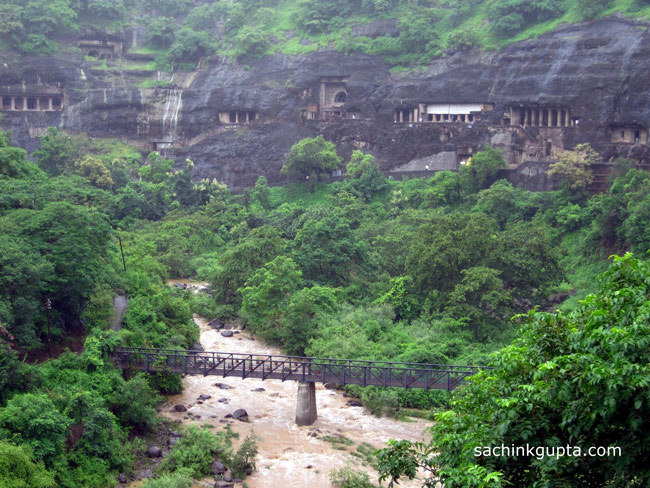
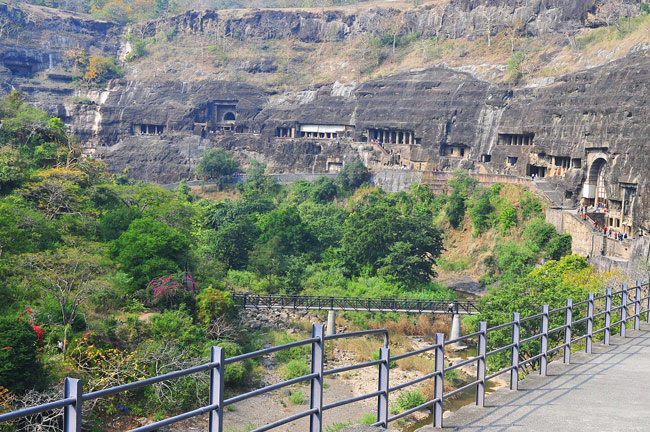
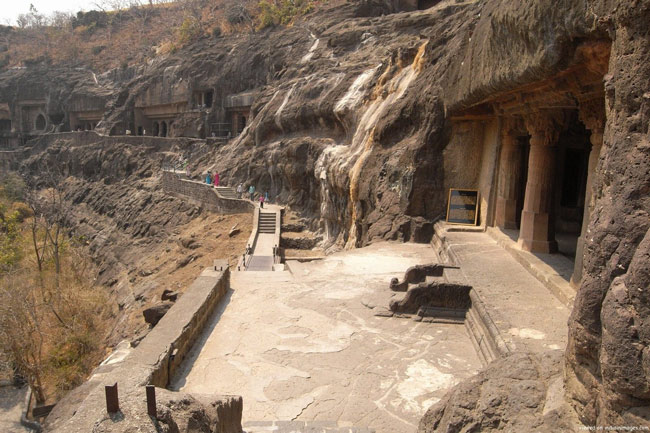
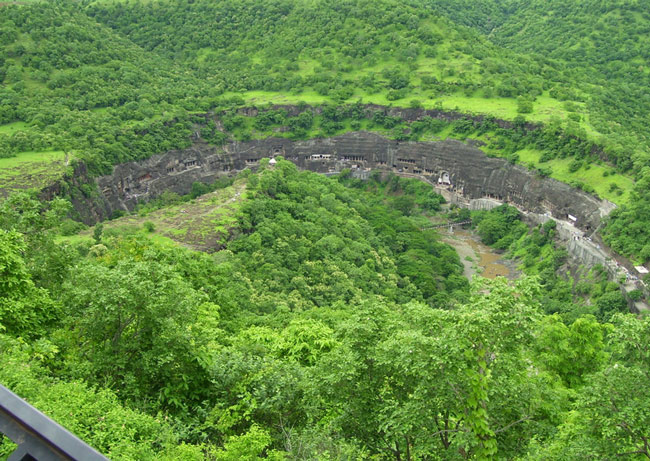
Exterior view of the Ajanta cave temple in India.
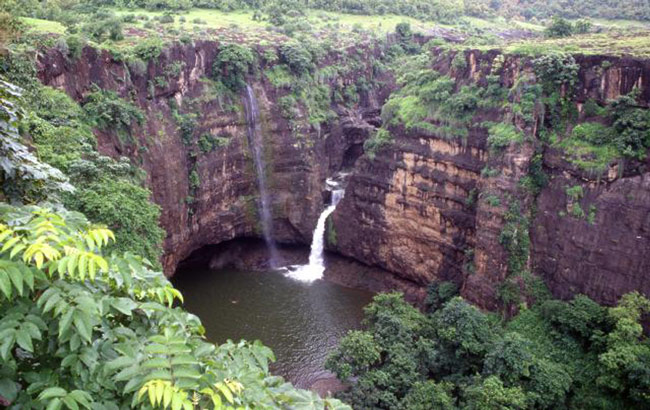
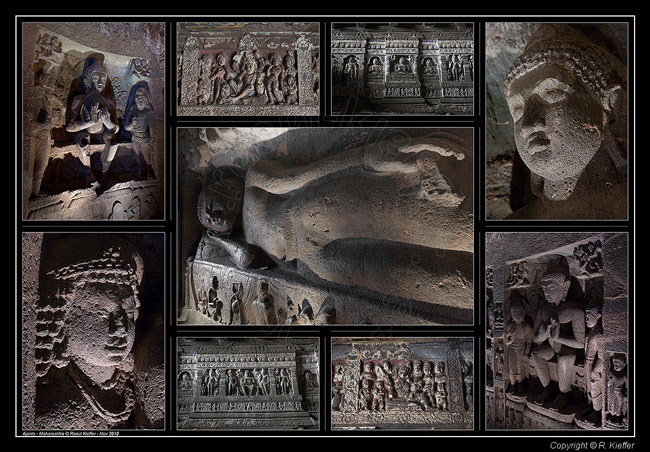
The Ajanta cave temples are located halfway up a mountain, with the winding Waghora River flowing below . The caves are arranged in a horseshoe shape, carved deep into a 76-meter-high vertical cliff. The Ajanta cave complex comprises 30 caves, including Buddhist temples and surrounding areas. Archaeologists have numbered the caves sequentially. Because the Ajanta cave complex was not built in a continuous period, researchers have divided the caves according to their construction periods. The cluster of caves built in the early 2nd century BC, including caves 8, 9, 10, 12, 13, and 15, reflects early Buddhism. Later clusters, built in the 5th century, reflect later Buddhism, and some caves remain unfinished. Despite their incomplete state, the cave temples are still one of the greatest man-made structures. One of the most remarkable features of this cave complex is the enormous number of Buddhist sculptures. These are considered some of the finest examples of Buddhist art in India.
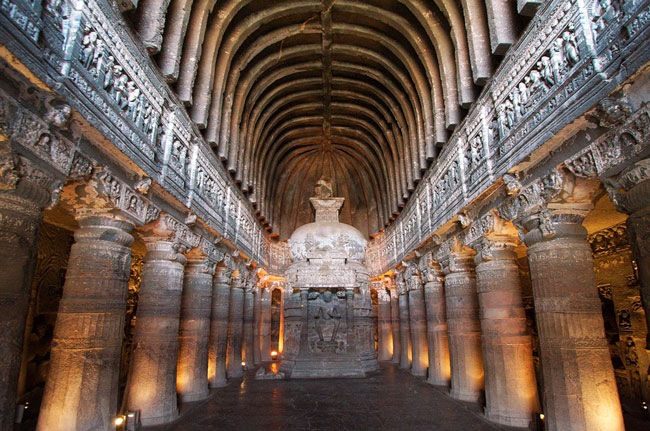
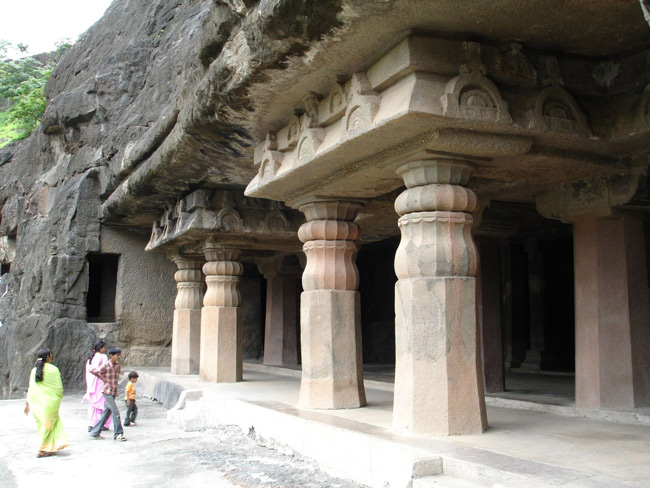
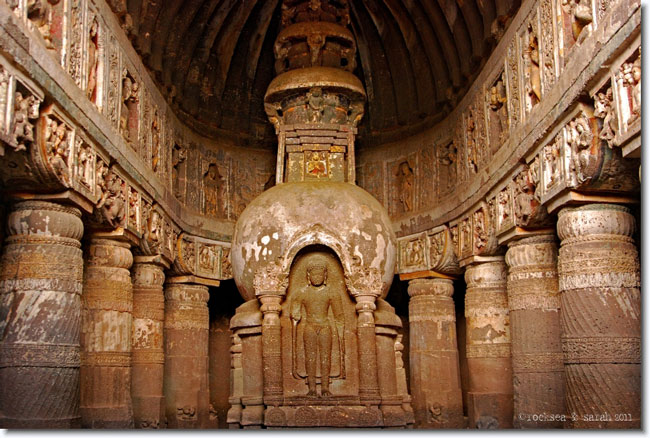
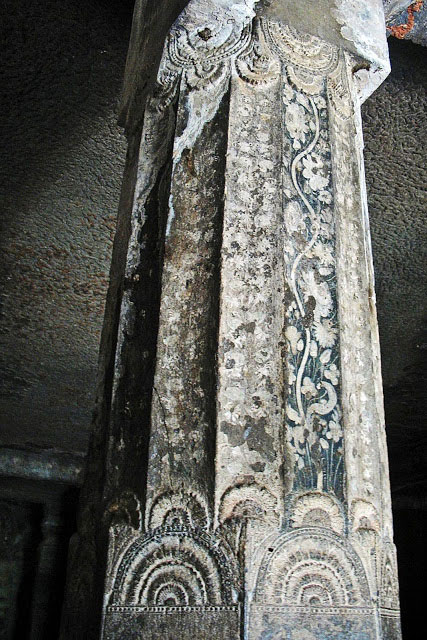
The unique and impressive architectural features inside the caves at Ajanta Cave Temple.
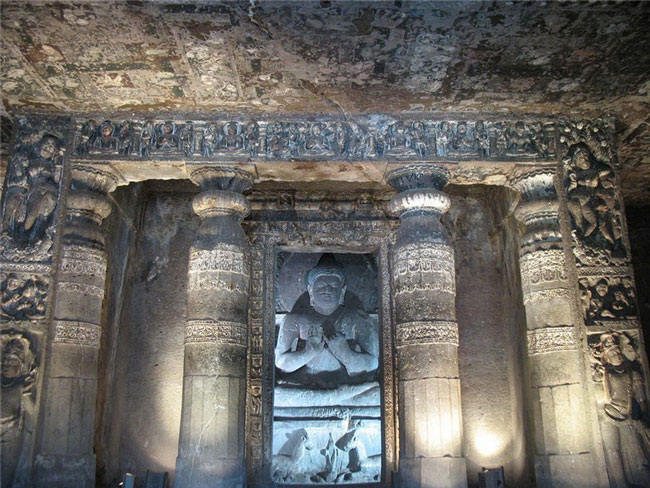
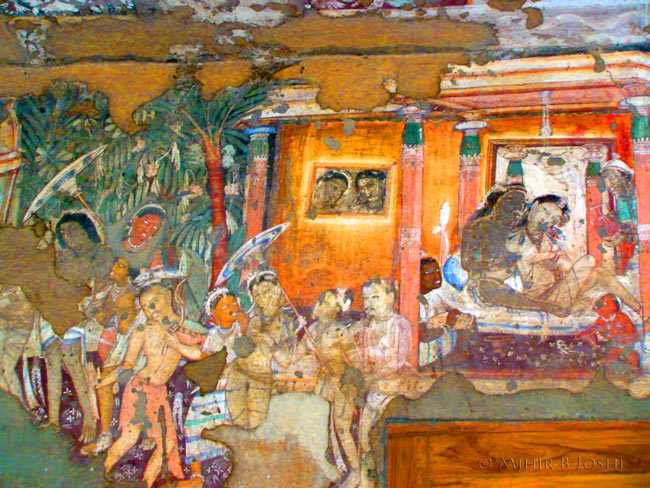
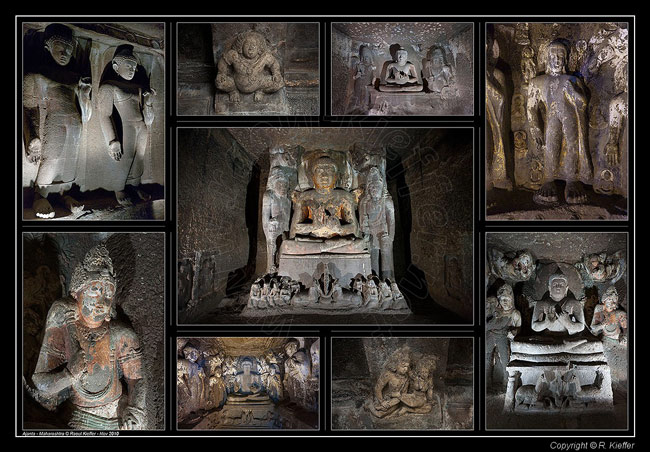
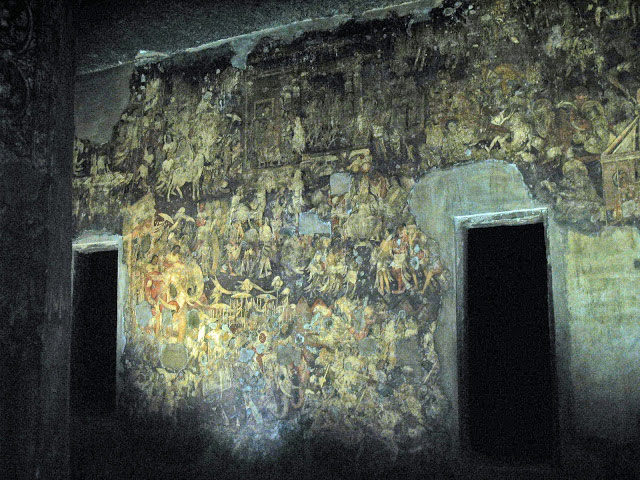
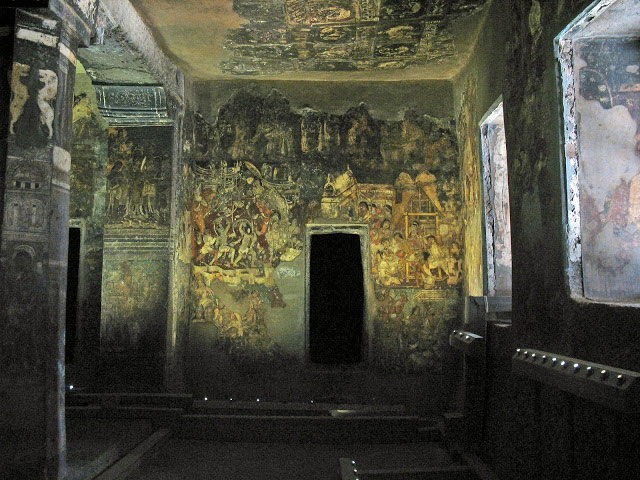
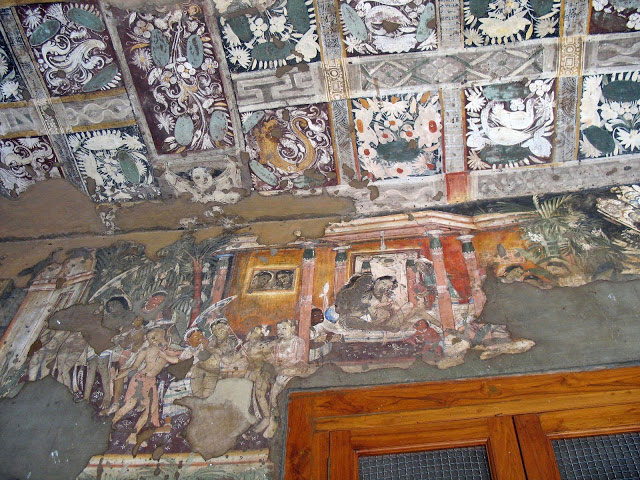
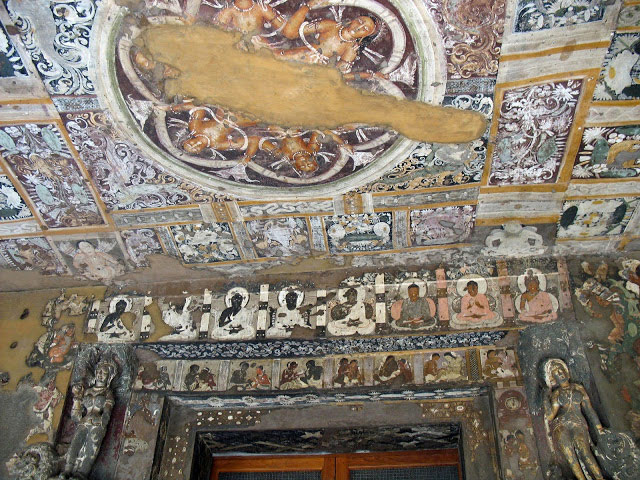
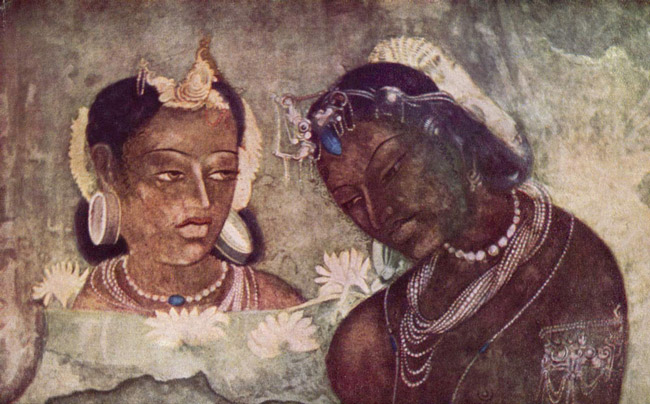
The Buddhist cave temples in Ajanta vary in size, with the largest measuring approximately 16 square meters and carved out in a square shape. The construction of these cave temples also varies greatly; some are simply built, while others are quite elaborate and sophisticated. Some temples have domes, while others do not. However, the essential element of a temple is the place of worship. During the Vakataka period, Buddhist worship areas were given less attention because spacious areas were often used for living quarters and gathering places for devotees. Later, more Buddhist worship areas were built. These worship areas are usually built against the cliffs behind the center of the temple, and each worship area typically features a seated stone Buddha statue. Besides the caves, Ajanta is particularly famous for its rock paintings and ceiling murals. In total, there are up to 500 such paintings in Ajanta. The colors in the paintings are made from minerals and plant-derived substances, resulting in a harmonious yet contrasting effect that remains vibrant even after thousands of years. All the paintings focus on depicting the life of the Buddha and his previous lives (including many incarnations as animals and many as humans of humble origins). Therefore, although all are connected to Buddhist themes, the paintings are not limited to monastic life but encompass a broader reality: court life, the lives of ordinary people in cities and villages, the world of birds, animals, plants, and flowers, and even the world of celestial beings and divine creatures in the heavens. A life of excitement, exhilaration, and passion. The young women in the Ajanta paintings are depicted as very alluring, with graceful curves and lively expressions in their eyes and lips, both captivating and shy. The artists also skillfully utilize the distribution of light so that viewers, as they shift their position, can see the characters in the painting blinking, smiling, and appearing extremely lifelike. It can be said that Buddhist art uses the beauty of the material world as a means to guide the aspirations of its followers towards the spiritual beauty of true enlightenment. Its strength lies in the very message of the Enlightened One , calling upon our intellect to overcome the pitfalls of temptation. By transcending the illusory and deceptive forms of beauty, we will see true beauty.
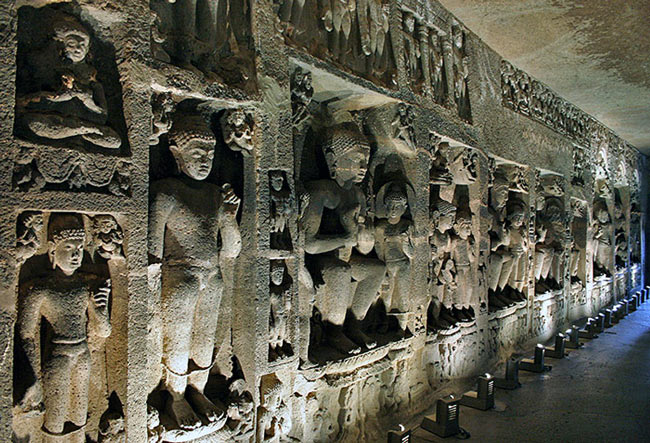
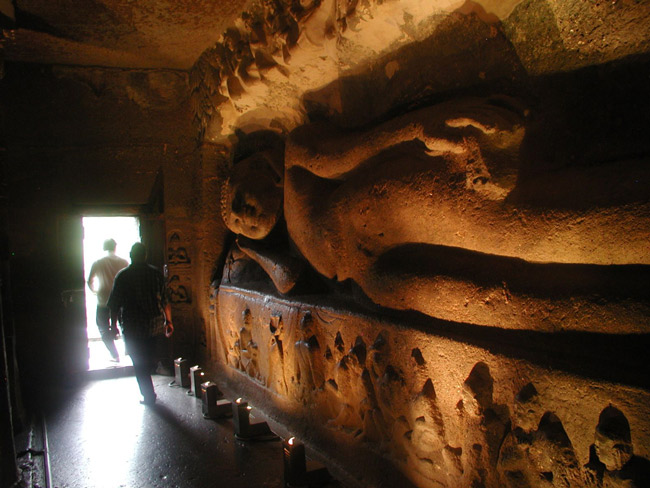
The long rows of hand-carved Buddha statues and the large Buddha statues in the caves are masterpieces of Indian Buddhist art.
If you visit the Ajanta Caves, you will be truly amazed by the magnificent scenery and the masterpieces it contains. From the very first steps, visitors will be overwhelmed by the long rows of hand-carved Buddha statues on the cave’s facade. Deep inside the cave, a historical story about the Buddha’s enlightenment and arduous spiritual practice will be revealed through a series of sculptures within.
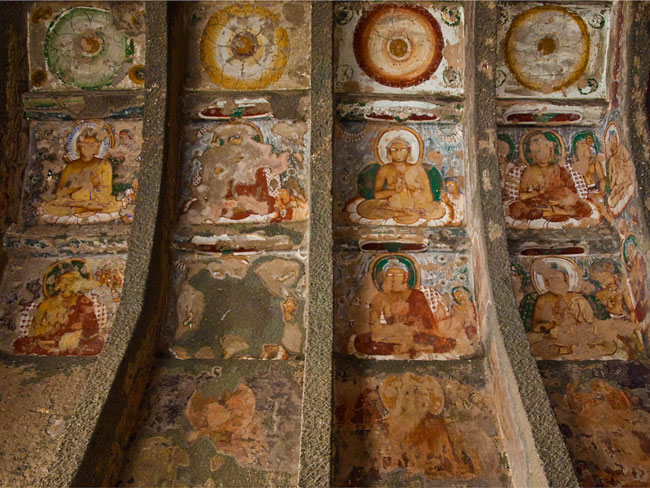
Among the artworks here are some that have reached the pinnacle of beauty and become masterpieces. Even more impressive is the way the ancient artisans created their artwork. According to some sources, the main materials used to create these paintings were pebbles and various fruits and vegetables. The fruits and vegetables were crushed to form a paste, which was then further ground and mixed with colorful pebbles to create a kind of paint for the artworks. These materials, researched and developed by the ancients, have been proven and tested over hundreds of years, and their beauty remains intact to this day. This further enhances the cultural and historical value of the Ajanta Caves.