



At the age of four, Shanti Devi began telling her parents astonishing details about her “previous life” in a strange town more than 100km away .
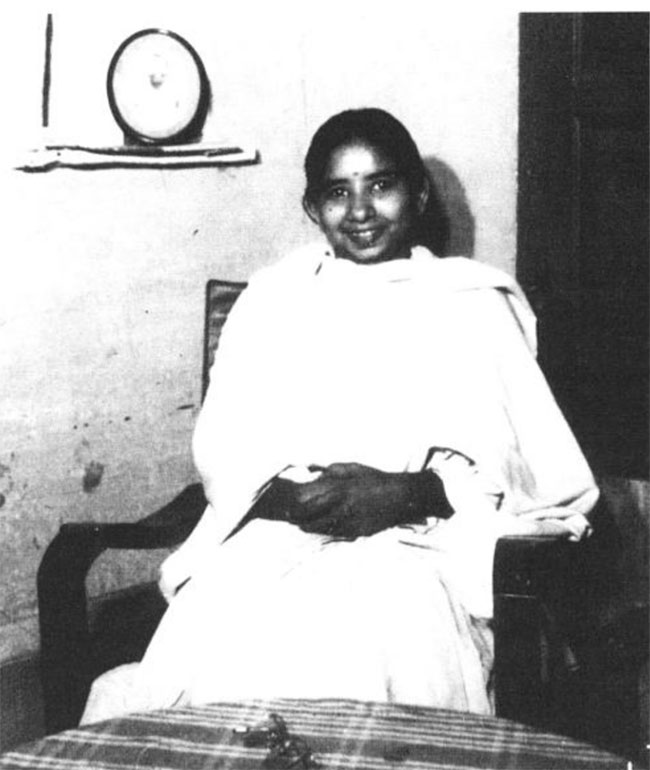
Shanti Devi recounts every detail of her past life, and her story has attracted the attention of reincarnation researchers around the world. (Image: Goodreads)
Religion and philosophy have long discussed the existence of the soul, and the case of a young girl named Shanti Devi , who lived in New Delhi, India in the 1930s, is a compelling example of reincarnation after each lifetime.
Soon after learning to speak, Devi astonished her parents with stories of her past life in a town no one in the family had ever been to. Anything in her current life would trigger memories of her “past lives.” For example, a meal might bring back memories of dishes she had enjoyed in the past, or while getting dressed, she would tell her mother about the clothes she had worn before.
Devi even told her parents that her previous name was Lugdi , and that Lugdi had died after giving birth to a son in October 1925. She also recounted bizarre details about the labor pains and surgical procedures Lugdi underwent.
Clearly, such facts could not have been conjured up by even the most imaginative child.
When Devi revealed the name of her “past life” husband , her family was shocked to discover that he was still alive and in the exact same place Devi said she had lived. A historic encounter was arranged between them, and what happened left scientists truly baffled.
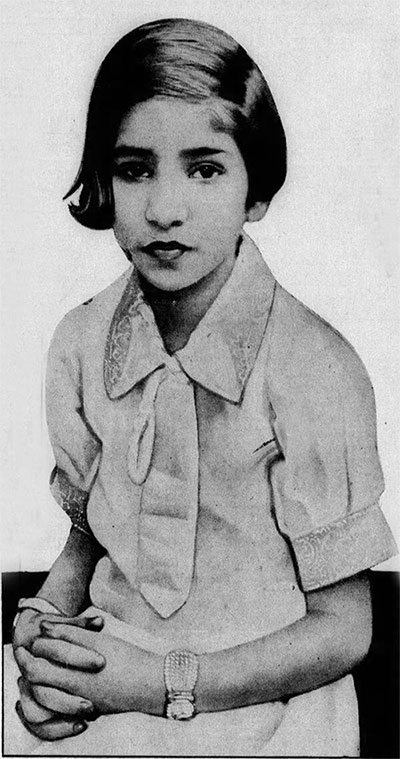
Shanti Devi appeared in a newspaper in 1937. (Photo: Pittsburgh Sun-Telegraph)
Memories of a past life
Born on December 11, 1926, Shanti Devi was a very ordinary child until around the age of four, when she began sharing strange stories about her “past lives” in the town of Mathura, more than 100km from her home.
Devi recalled all the shops and streets in Mathura, a place she and her current family had never been to. She spoke of her ex-husband, a businessman, but only revealed his name at the age of nine, along with details such as a mole on his left cheek and always wearing reading glasses.
Upon hearing their daughter’s strange memories, Devi’s parents initially dismissed them as mere childish fantasies. However, when Devi revealed that the name of her “past life ” was Pandit Kedarnath Chaube , sometimes referred to as Kedar Nath , a family friend decided to investigate whether what she said was true.
The friend wrote to a merchant named Kedar Nath in Mathura to inquire about Devi’s memories. Surprisingly, Nath wrote back, confirming all the details Devi had recounted. Nath also agreed to go to Devi’s house with a relative to investigate the situation.
To test Devi, Nath brought a relative to meet her and introduced him as her husband. Devi immediately denied it, saying he was just a cousin of her “husband .” Surprisingly, Nath and his child with Lugdi, now 10 years old, entered the house. Upon seeing them, Devi burst into tears.
Nath requested to speak privately with Devi, after which he declared that every answer she gave to his “test” questions was completely accurate.
“He found the answer accurate and was so moved he wept! It was as if his deceased wife were speaking,” an investigator wrote in a 1937 report on the case.
In 1935, Indian leader Mahatma Gandhi sent 15 members of parliament, officials, and media representatives to investigate the case of Shanti Devi.
Shanti spent a few days with Kedar Nath and his son before they had to return to Mathura. Grieving at the thought of parting ways with her “husband and son ,” she begged her parents to let her return to her hometown. Devi promised she could take them directly to their old house, even revealing that she had buried a money box there.
Devi’s parents agreed, because once the story had attracted the attention of Indian leader Mahatma Gandhi, they had virtually no other choice. In November 1935, dozens of researchers and investigators joined Devi and her parents on a three-hour train journey to Mathura.
Return to the old house
One of the investigators recounted: “Upon leaving the station, the girl was escorted to the front seat, and our car drove ahead of everyone else. The driver was instructed to follow only the route the girl indicated.”
Devi easily led the group to what she claimed was her old home. Along the way, she also noted many streets that had previously been unpaved and buildings that weren’t there in her past life. The driver confirmed these observations.
Upon arriving at the house where Kedar Nath and her son lived, a member of the investigative committee established at the request of the Ghandi leader questioned them about the money box Devi had mentioned. The girl immediately ran upstairs, went straight to a corner of the room, and claimed the box was hidden under a floorboard. Kedar Nath opened the floorboards and found a small silver box, but it was empty. Her husband subsequently admitted to taking the money from the box after his wife’s death.
Devi’s reunion trip to Mathura continued at her former parents’ home . “She not only recognized the house but was also able to identify her former parents among a crowd of over 50 people ,” one investigator wrote.
In its report, the investigative committee stated that there was “no reasonable explanation” for what they had witnessed.
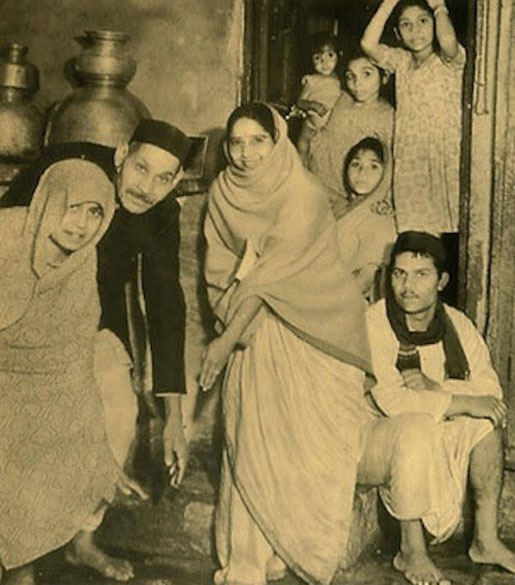
Shanti Devi (third from the left) never married and lived with her parents until their deaths. (Photo: Goodreads)
Experience death
It seems that Devi not only recalled her past life but also had an explanation for her journey into the afterlife . In 1936 and 1939, she recounted her near-death experiences to skeptics and hypnotists alike.
Devi said that at the moment of death, she felt dizzy and was enveloped in “profound darkness” before a flash of light revealed four men in yellow underwear in front of her. “All four seemed to be teenagers, and their appearance and clothing were very bright,” Devi said while hypnotized. “They put me in a cup and carried me away.”
Devi said she saw the Hindu god Krishna showing each person a “record” of their good and bad deeds during their lifetime and telling them what would happen to them next. Afterward, Devi was led to a golden staircase, from which she could see a river “clean and pure as milk .” She saw spirits flickering there like “flickers in lamps.”
Many years later, Shanti Devi appeared in a press interview in 1958. At that time, Shanti Devi was 32 years old and had never married. She lived a quiet, spiritual life in Delhi.
Shanti Devi passed away in 1987 at the age of 61. Her story is preserved in a book by Swedish author Sture Lonnerstrand, written in 1994 and translated into English in 1998.