



To date, no one has been able to explain the existence of this rock .
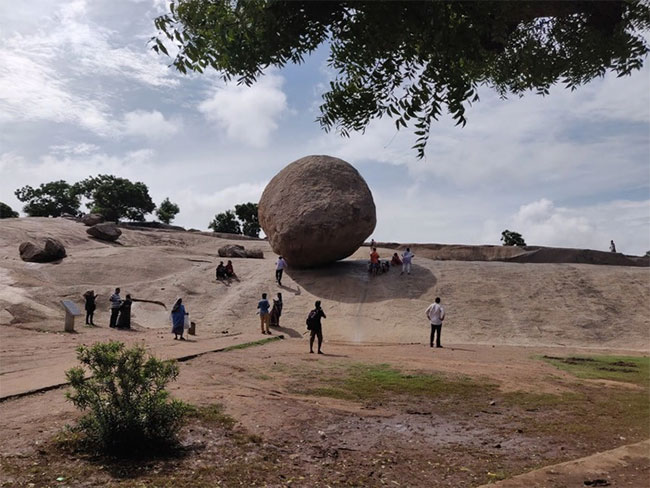
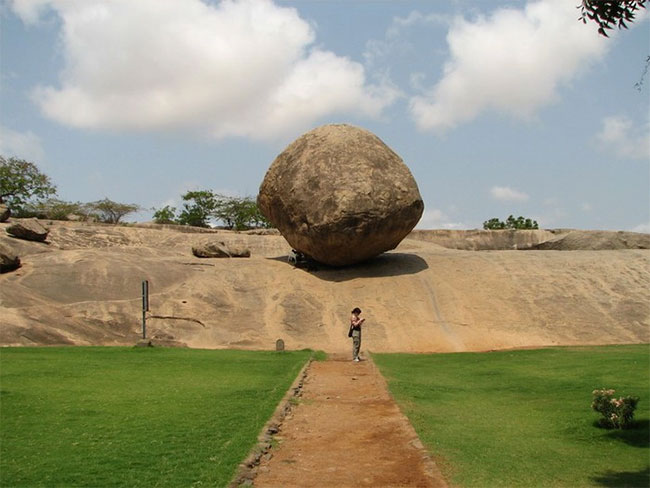
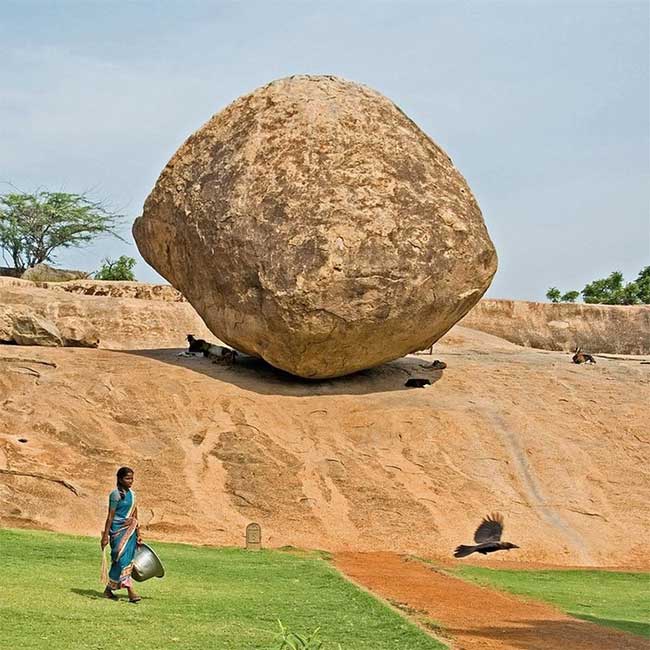
Krishna Butter Ball is a massive rock located in the southern Indian state of Tamil Nadu, famous for its peculiar balancing posture on a hillside that has persisted for centuries.
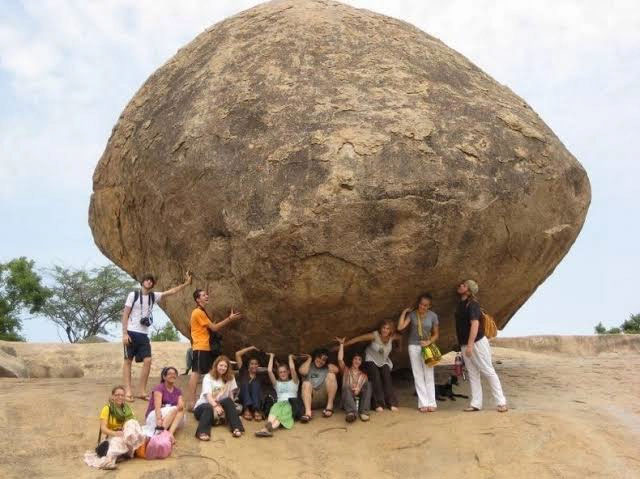
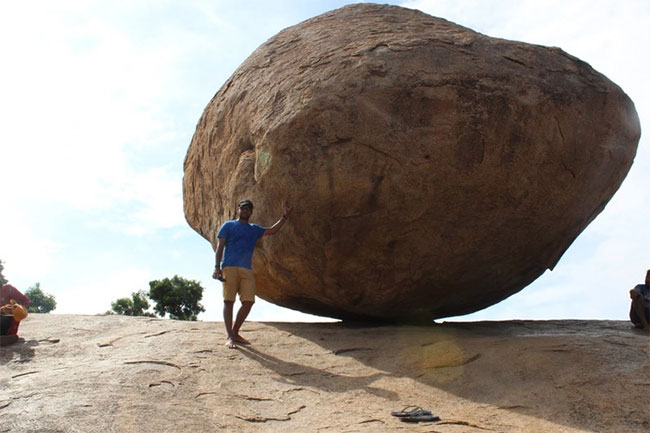
According to The Epoch Times, Krishna Butter Ball is located in Mahabalipuram, a town in Kancheepuram district of Tamil Nadu. The stone, weighing over 250 tons, is 6 meters high and 5 meters in diameter, situated on a 45-degree slope.
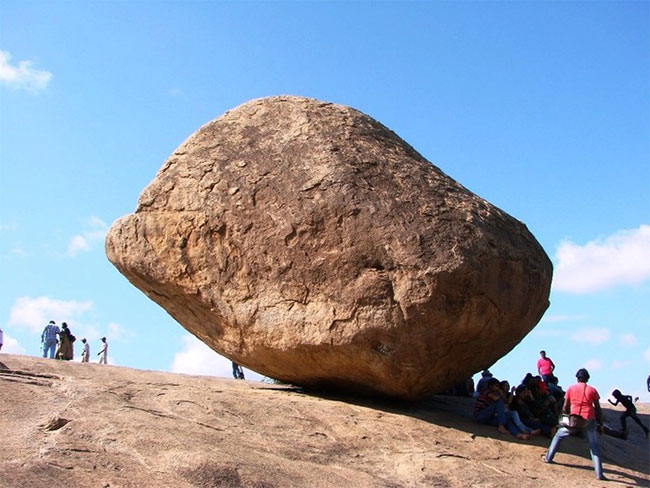
Although the contact surface of this rock with the sloping hill below is very narrow, seemingly ready to roll down with just a gentle push, this rock has survived for over 1,300 years under the sun, rain, wind, and frost without ever moving. Naturally, this rock has become an interesting tourist attraction.
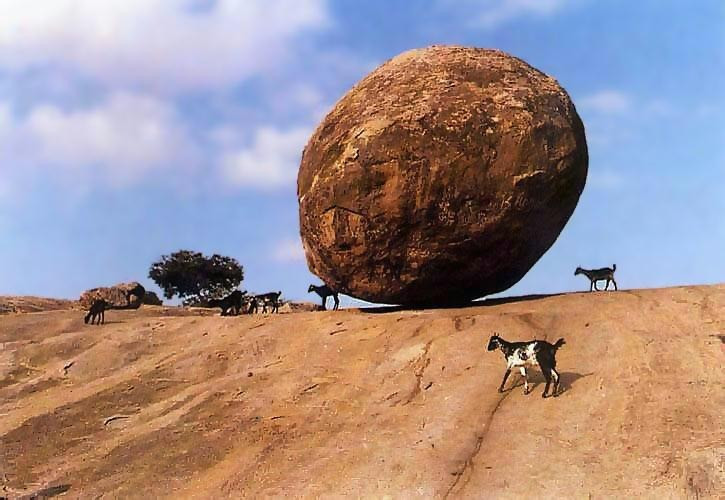
The rock has remained balanced on the hillside for centuries. (Photo: The Indian Times)
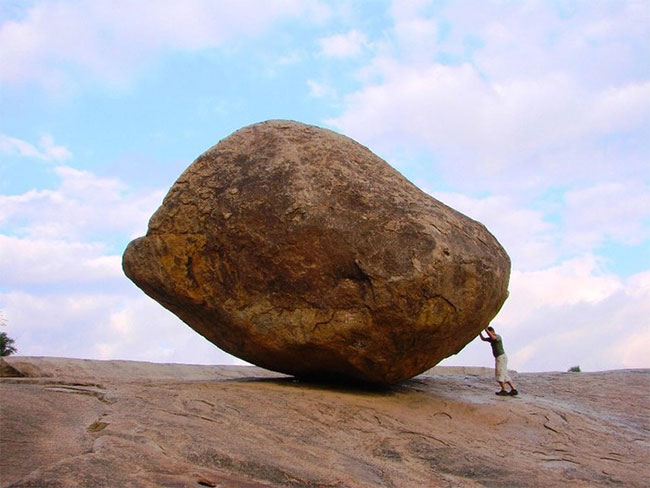
Despite its enormous size, the rock remained perfectly balanced on a very small contact surface with the hillside. It neither rolled down the hill nor budged despite all attempts to move it. In the 7th century BC, a king of the Pallava dynasty in India was the first to try to move the rock to prevent it from falling into the hands of sculptors, but he was unsuccessful.
In 1908, Arthur Lawley, the governor of Madras, intended to move the boulder from the hillside, fearing it might roll down at any moment and destroy the town at the foot of the hill. Seven elephants were used to attempt the move, but the boulder did not budge. The governor’s fears proved unfounded, and the town below remained safe. However, to this day, scientists have been unable to explain what keeps the boulder in such a balanced position.
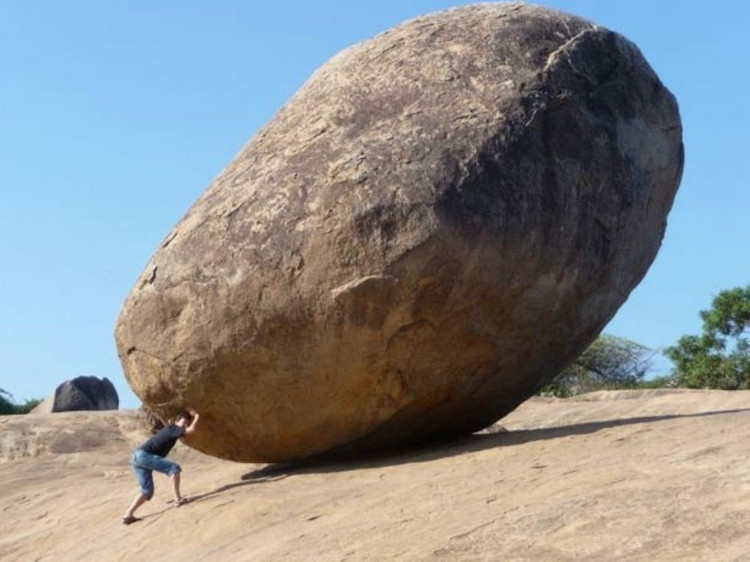
The massive rock remained motionless despite all attempts to move it. (Image: Wikimedia).
Krishna’s Butter Ball is known locally as Vaan Irai Kal , meaning “Stone of the Gods .” They believe the gods placed the stone at Mahabalipuram to demonstrate their power to the town’s inhabitants. According to Indian legend, the goddess Krishna, as a child, loved butter and often took it from her mother’s jar. Because the stone at Mahabalipuram resembles a drop of butter that the goddess dropped to the ground, it is nicknamed “Krishna’s Butter Ball.”
Geologists have repeatedly sought answers to the appearance of this rock. They speculate that it is part of a hill at the foot of a mountain . It may have been a very high mountain, but the soil in this area gradually subsided, and natural erosion contributed to the formation of this precarious rock.