



What horrific reality would unfold on Earth if all of humanity suddenly vanished overnight?
Since the Earth was formed, various living organisms have appeared one after another, but in its nearly 550 million-year history, many species have become extinct.
In fact, more than 90% of all life forms that have ever existed on Earth have completely disappeared. When one organism becomes extinct, another evolves and replaces it.
Millions of years ago, the ancestors of humankind were born on Earth and began competing with other mammals of the time for dominance over the planet.
After millions of years of evolution and development, humankind, relying on their skillful hands and unparalleled intelligence, became the new masters of the earth and established a glorious human civilization.
But nowadays, humans have disrupted the Earth’s ecological balance, and extreme climates and natural disasters are causing many species on Earth to become extinct rapidly.
Scientists predict that if the situation continues, in less than a century, the sixth mass extinction will officially begin, and humans will share the same fate as the dinosaurs. So, what will Earth be like after humanity disappears?
Infrastructure collapses
There are countless future scenarios for the extinction of humanity. If a virus were to cause a global pandemic, wiping humans off the planet rapidly, densely populated cities would be the places most affected.
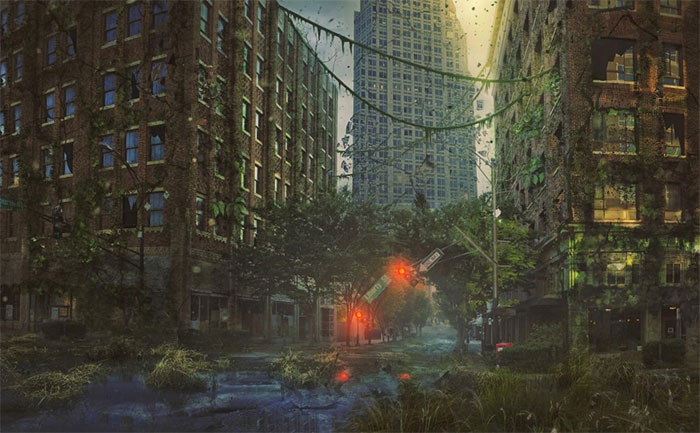
A plot of land overgrown with vegetation after being left abandoned for many years. (Photo: William Widmer/The New York Times).
According to research by Weisman, without traffic controllers, groundwater regulators, or city sewage systems, subway systems like those in London or New York risk being completely submerged in just 36 hours.
Oil refineries and nuclear power plants, if not regularly monitored, can lead to fires, reactor explosions, and the release of extremely dangerous radioactive materials. Similarly, ecosystems that humans are only just learning to appreciate will be dragged down and destroyed by mountains of non-biodegradable plastic waste.
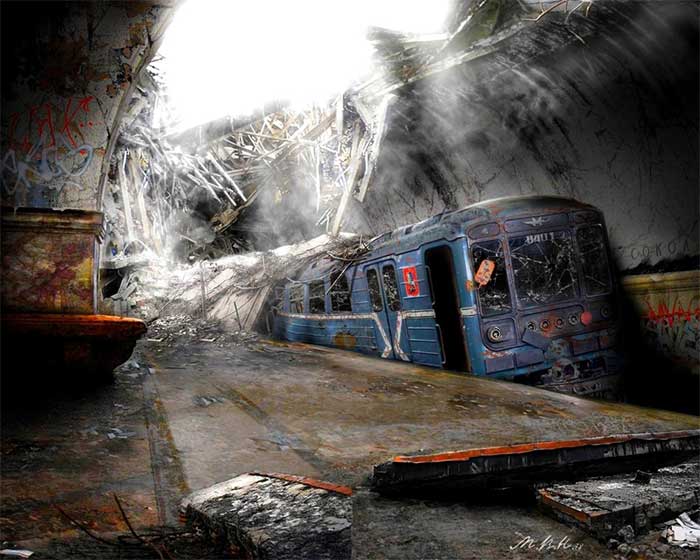
Public transportation systems in cities could collapse in just one day. (Image: iStock)
Nature, with its encroaching trees, began to encroach upon architectural structures, causing the entire infrastructure to collapse and be replaced by dense forests. This resulted in the accumulation of enormous amounts of dry leaves and flammable material. Weisman stated, “Fires from lightning will create a lot of ash, which is a nutrient for life. Streets will turn into fields and forests within 500 years.”
Notably, “The longest-lasting structures are those constructed from non-man-made materials, such as stone structures. At this point, these massive mounds of earth and boulders will become the planet’s unique symbols, replacing the skyscrapers that humans have built.”
The world is silent.
If humans disappeared from the world, the first thing that would be most noticeable would be related to hearing rather than sight , according to Carlton Basmajian, associate professor of regional planning and urban design at the University of Iowa. The world would be incredibly quiet, and you would realize just how much noise humans make. After a year without humans, the sky would be bluer and the air cleaner. Wind and rain would clean the Earth’s surface. All the smog and dust caused by humans would disappear, according to The Conversation.
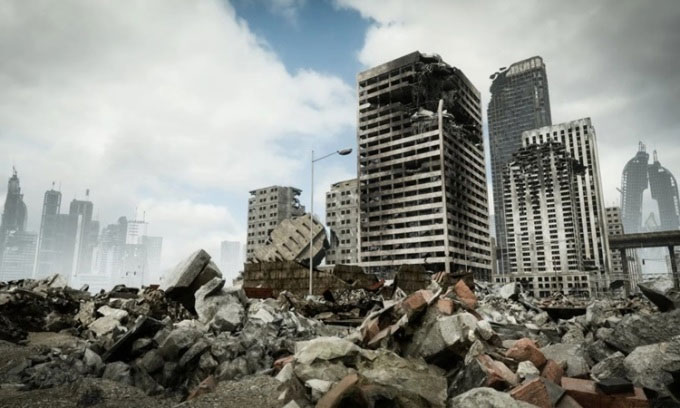
A simulation of a post-apocalyptic world. (Image: Bulgar/E+).
Indoors
In that first year, when no one visited the houses, there was no water on the taps. The water system required constant pumping. If no one at the water supply company was managing the pumps, no water would reach the households. But the water in the pipes, even after everyone was gone, would still remain until winter arrived, so during the first cold spell, the frigid air would freeze the water in the pipes, causing them to crack.
Furthermore, these houses also lack electricity. The power plant would shut down because there would be no one to monitor the machinery and maintain the fuel supply. Therefore, the house would be plunged into darkness, with no lights, TV, telephone, or computer. The house would be covered in dust. In fact, dust is always in the air, but we don’t notice it because of the air conditioning and heating systems blowing air around.
The grass in your yard will grow tall until it becomes too long and soft to grow any further. New grass roots will appear everywhere. Many trees never seen before will take root in your yard. There will be no one there to pull or cut them down.
Many insects will buzz around the garden. People often get rid of them by spraying pesticides and removing their habitats. Without humans, the insects will return and dominate the world once again.
On the street
In the neighborhood, animals will roam around, first smaller ones like mice, marmots, raccoons, skunks, foxes, and beavers. Larger animals will appear later, including deer, coyotes, and sometimes even bears.
Without electric lights, the natural world would revert to its normal rhythm. The only light would come from the sun, moon, and stars. Fires would occur frequently. Lightning could strike trees, fields, setting bushes ablaze, or hit houses. Without humans to fight the fires, they would continue to spread until they extinguished themselves.
Biodiversity will recover.
Insects, the most numerous class of organisms on the planet, will thrive when humans no longer control them or use pesticides. Consequently, a chain reaction will occur in the ecosystem: plants will flourish, followed by an increase in the number of bird species.
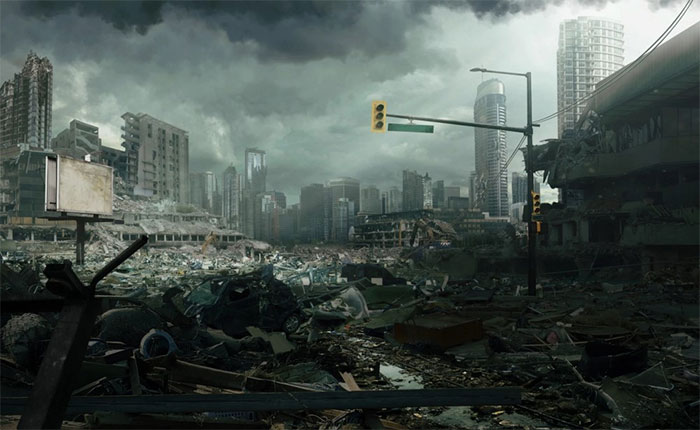
Scientists predict the human extinction rate is 1 in 14,000. (Image: iStockphoto).
This shift will lead to an increase in biodiversity on a global scale. Modeling the diversity of large animals—such as lions, elephants, tigers, rhinos, and bears—across the planet, scientists reveal that the world was once very rich. But that changed when humans began to expand, hunt, and encroach upon their habitats.
Søren Faurby, a lecturer in macroevolution and macroevolution at the University of Gothenburg, Sweden, explains: “ As humans migrated out of Africa and Eurasia to other parts of the world, the extinction rate of animals in those areas also steadily increased.”
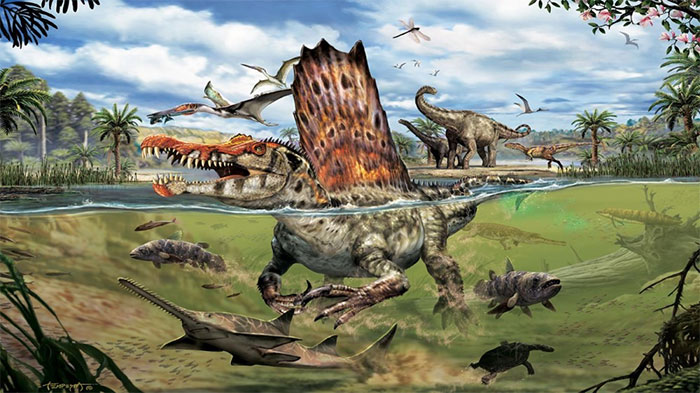
The world was once incredibly diverse until humans appeared. (Photo: National Geographic)
He further emphasized: “Without the heavy impact of humankind, the central United States and parts of South America today would be among the richest animal communities on Earth. Animals like elephants were common in the Mediterranean islands. There were even rhinos living in Northern Europe.”
Faurby and his colleagues calculated that even if humanity were to disappear, it would still take millions of years for the planet to recover from the extinction of many species. “It is estimated that it would take between 3 and 7 million years or more to return to the point in time before the extinction of many species,” said Jens-Christian Svenning, professor of macrobiology and biogeography at Aarhus University, Denmark.
The video below shows a sequence of events that would occur if the apocalypse suddenly struck. The video begins with the question: What would happen if everyone disappeared from this planet?
Nature always finds a way.
In a fictional world, nature might recover its original diversity, but the climate change impacts triggered by humankind are irreversible. Oil well explosions and gas leaks, when left unchecked, release massive amounts of CO2 into the atmosphere .
Although CO2 will not remain in the atmosphere indefinitely as it is absorbed by the ocean, this “reservoir” is not bottomless. At some point, seawater will become acidified due to excess emissions, leading to the poisoning of living organisms in the environment.
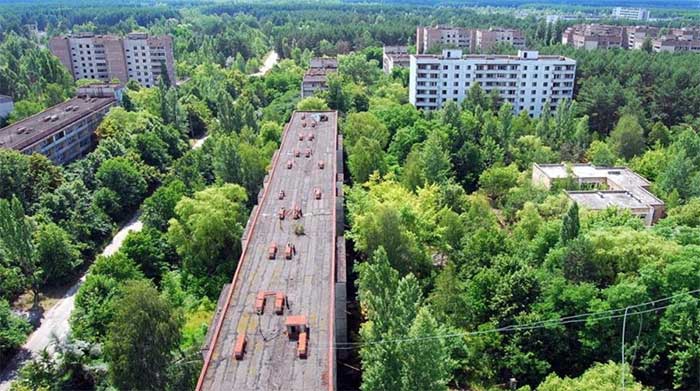
Chernobyl, one of the world’s largest abandoned sites. (Photo: CNTraveller).
According to Weisman’s book, the amount of CO2 in the atmosphere today will take thousands of years to dissipate, possibly even 100,000 years. However, he also expresses a hopeful point for humanity: the amount of CO2 in the atmosphere during the Jurassic period was five times higher, yet some marine organisms still managed to cope and survive.
The meaning he was referring to is that no matter how harsh the climate, nature still finds a way to survive, and plants and animals can adapt and evolve into a more advanced part of the planet.
Even a fleeting thought about the future is enough to make someone more mindful of their actions in the present. Preserving our place on the planet has been a relentless endeavor of humankind since the dawn of time.