



The French Organization for Science, Education and Culture recognized Mont Saint Michel Island in France as a World Heritage Site in 1979.
Mont Saint Michel Island – a World Heritage Site in France
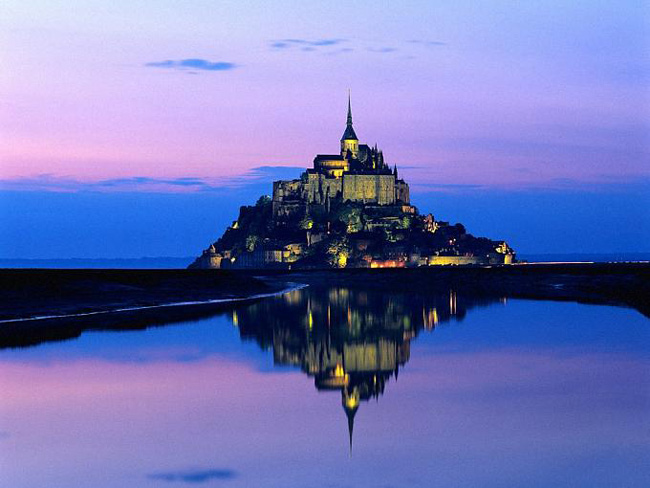
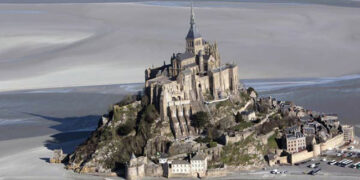
Mont Saint Michel is an island with a unique and mysterious blend of architectural structures and natural beauty. It is also the smallest island in France, often referred to as the rocky island.
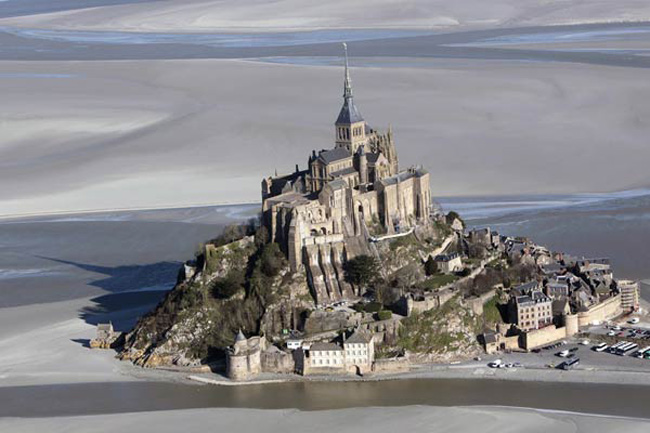
Mont Saint Michel is located in the Normandy region of France, more than 350 km from Paris and just 1 km from the southwestern coast. Due to its small size, the island has a population of fewer than 50 people, yet it attracts up to 3 million visitors annually. This number speaks volumes about the immense appeal of this tiny island.
In the 8th century AD, this place was a crucial fortress of France and also the main church of the Saint Michel citadel . It is for this reason that the island was named Saint Michel. In ancient times, this land was part of the mainland; over millions of years, erosion by the sea has sculpted the land and rocks into this unique island.
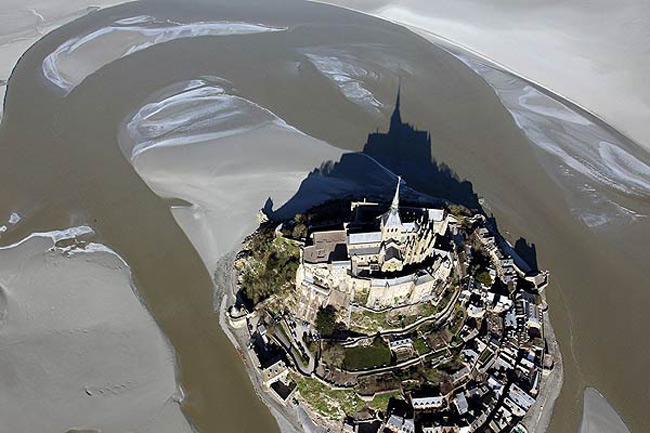
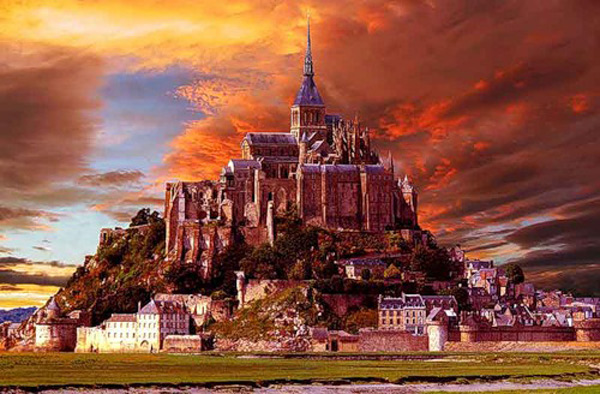
Deserving of its reputation as one of France’s top three tourist attractions, alongside the Eiffel Tower and the Palace of Versailles , Mont Saint Michel Island is always mysterious and holds a special allure for visitors. On the island is a Benedictine monastery , its spire reaching straight up into the sky. The monastery’s grandeur and mysterious, fairytale-like appearance led Hollywood filmmakers to choose it as the filming location for The Lord of the Rings.
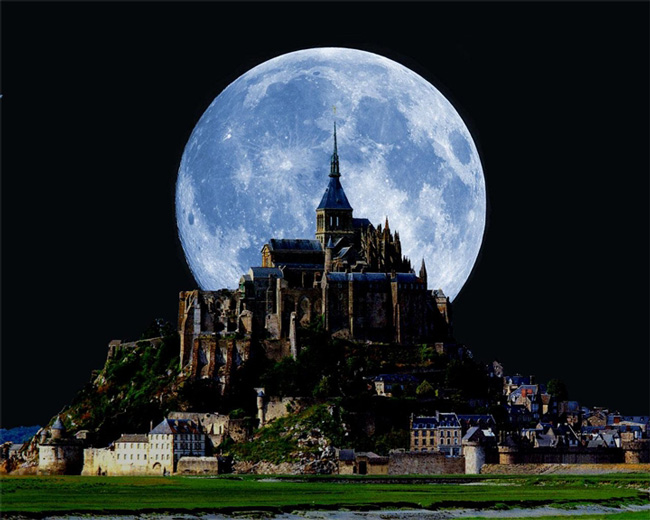
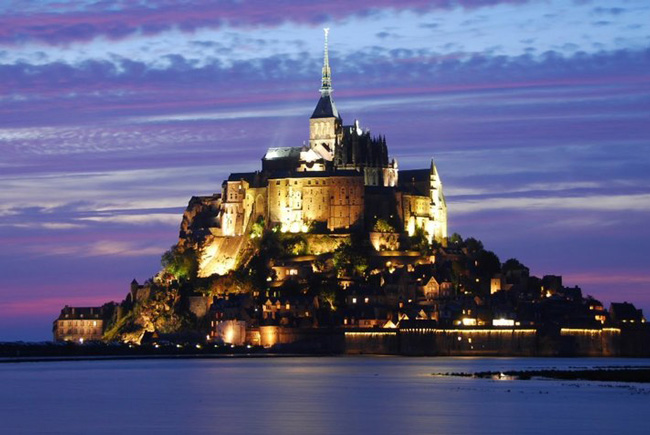
At night, Mont Saint Michel island takes on a mysterious and enchanting appearance. This is what has made Mont Saint Michel island increasingly famous, attracting not only tourists but also Hollywood filmmakers.
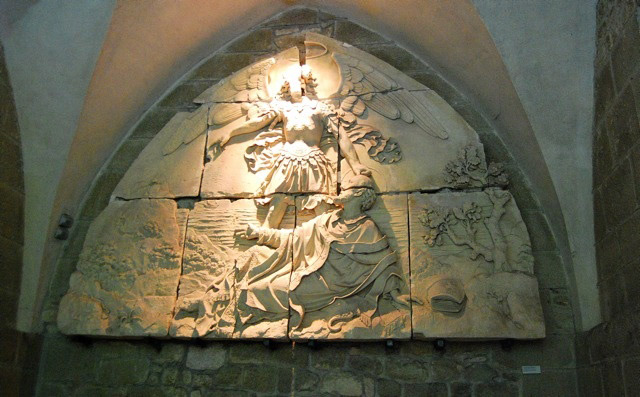
The mystery of the island and its monastery is evident in its very history. Legend has it that long ago, Bishop Saint Aubert d’Avranches , in a dream, received three orders from Saint Saint-Michel to build a monastery on the island. In 708, Saint Aubert d’Avranches carried out this instruction, and two years later, in 710, the construction was completed. The island’s former name, Mont-Tombe , was subsequently changed to Mont-Saint-Michel.
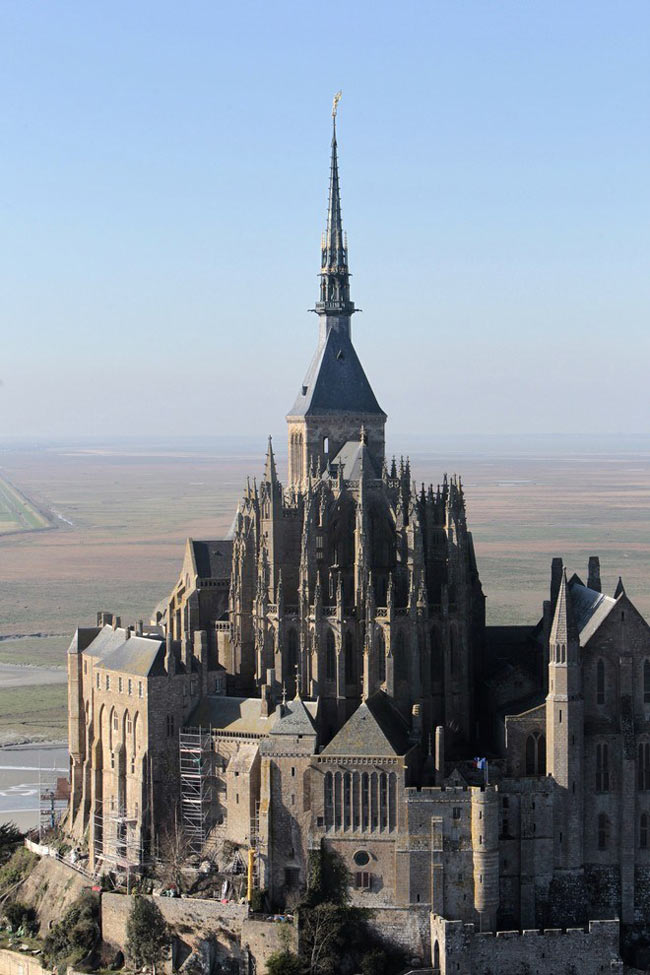
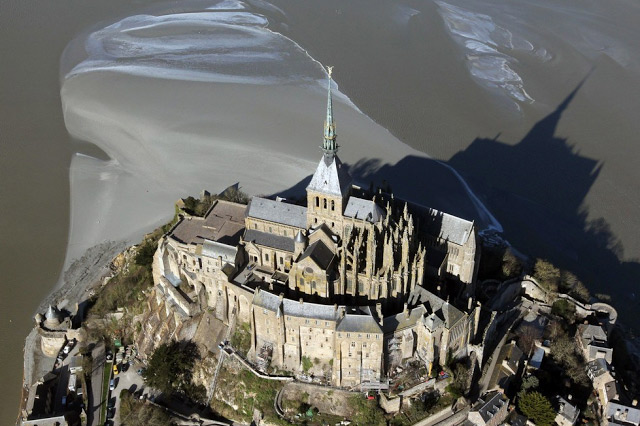
The pointed spire of Mont Saint Michel monastery also contributes to the mysterious appearance of this architectural masterpiece.
Before taking its present form, Mont-Saint-Michel experienced many historical ups and downs. After a great fire in 922 destroyed all the early religious structures, including the Mont-Saint-Michel monastery, in 966, Richard I, Duke of Normandy, built a Benedictine monastery on the island. Although reinforced and expanded, the Mont-Saint-Michel monastery was burned down again in 1203. The then King of France, Philip Augustus, dedicated a large sum of money to rebuilding the church. In 1228, a new monastery was rebuilt in the Gothic style , with its basic architecture still preserved today.
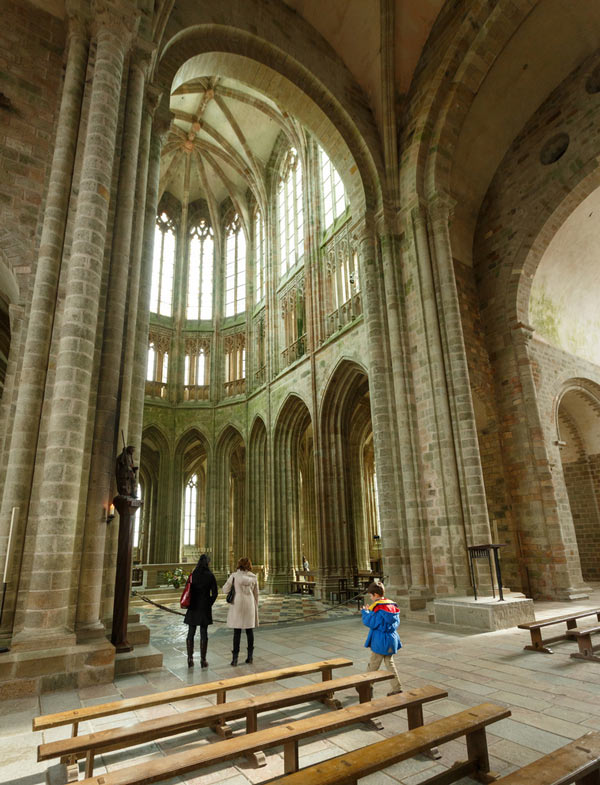
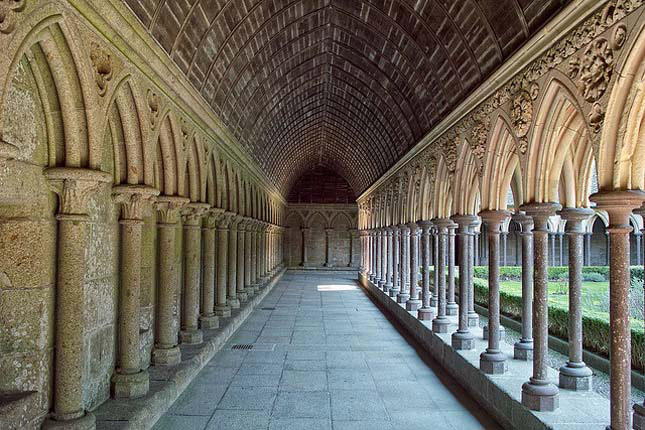
Previously, people could only reach the island when the tide receded, but in 1879, the government built a bridge connecting the mainland to the island.
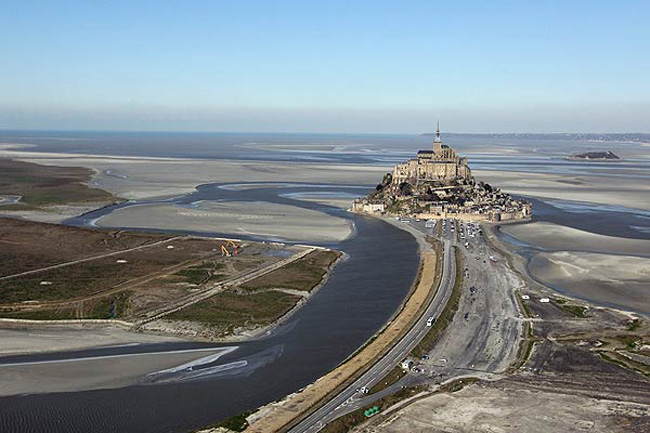
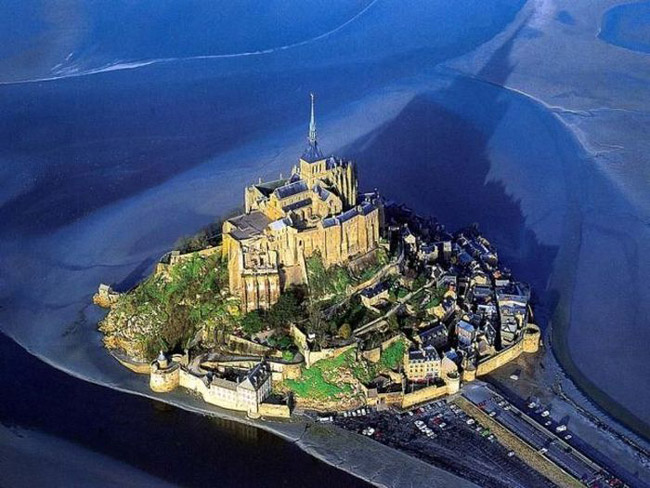
Another unique feature that sets Mont-Saint-Michel apart from any other island in the world is its constant change with the tides . Few places in the world experience such rapid and dramatic tidal fluctuations. There are approximately 53 days a year when the tides reach their peak, and the ebb and flow of the tides occur very quickly, within just a few hours. This tidal variation makes Mont-Saint-Michel appear sometimes like a fortress on land, and other times like a mysterious castle in the middle of the ocean. Perhaps this is why Mont-Saint-Michel was once considered a fortress during the war between England and France. After the war, for a period, Mont-Saint-Michel even served as a prison for over 100 years, from the late Renaissance to the French Revolution. During the French Revolution, Mont-Saint-Michel became a veritable prison. Many rooms in this monastery were converted into workshops with hundreds of forced laborers. Even today, Mont-Saint-Michel still retains the pulley system used to transport prisoners. Prisoners stood inside large wheels and used their strength to turn them, transporting them from the foot of the hill to the top. Under pressure from many writers, including Victor Hugo and Flaubert, the Mont-Saint-Michel prison was abolished in 1863.
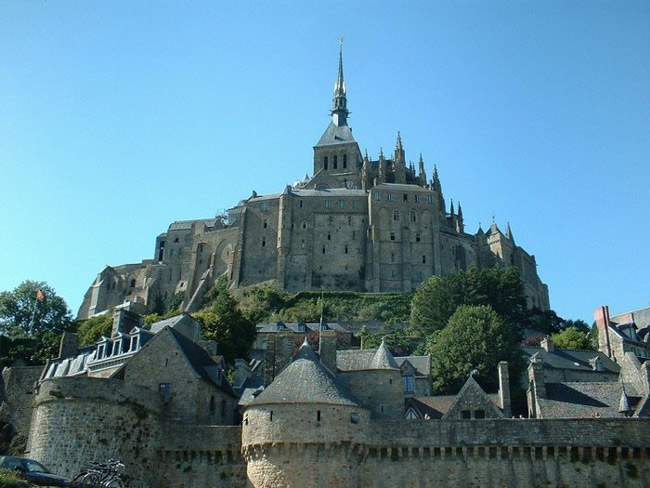
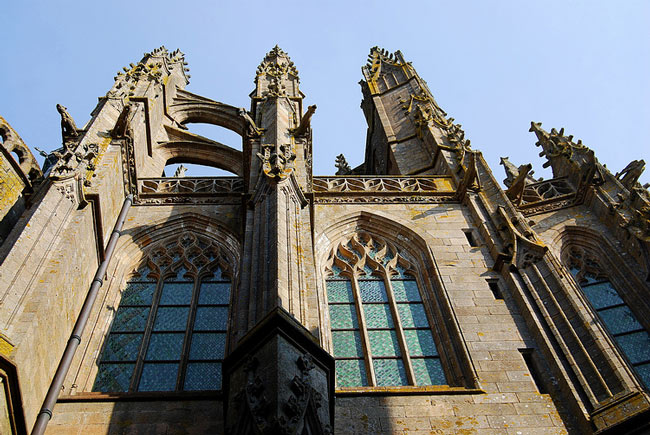
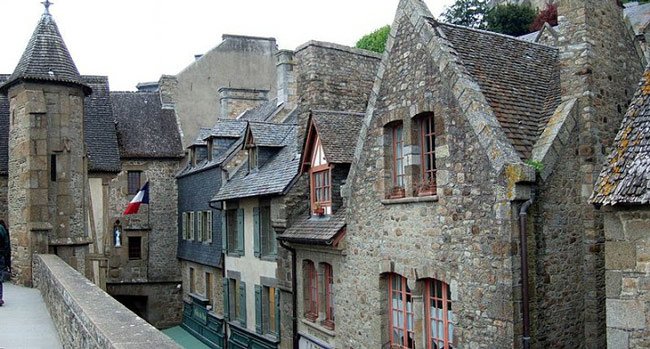
From the outside, the island essentially appears as a single architectural complex with a large castle and a few smaller structures surrounding it. The entire architecture on the island is Gothic in style and largely constructed of stone , giving the island’s architecture a uniform appearance.
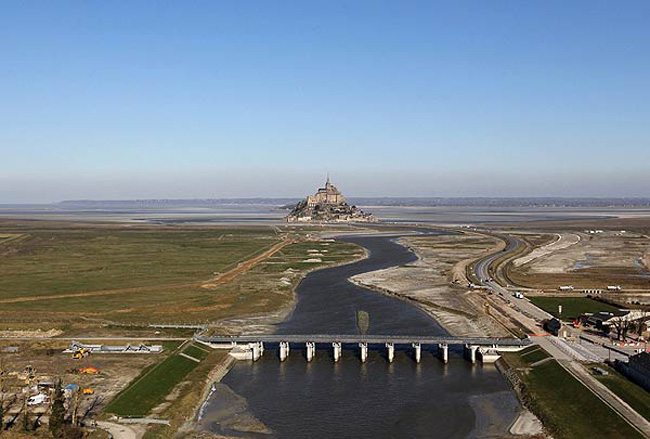
Previously, the island was connected to the mainland by a natural land bridge, which only appeared at low tide; normally, access to the island required a boat. However, due to the increasing number of visitors, in 1879 the government built a dike connecting the island to the mainland. To this day, after centuries, the island has not lost its appeal but has become even more famous worldwide. Nearly 50 people currently live on the island, making a living from serving and providing tourism services. Restaurant services and other tourism services on the island are strictly managed because the large number of tourists poses a threat to this heritage site. In addition, being an island, when the sea level rises, the waves erode the architecture of the structures there.
In 2009, UNESCO listed this cultural heritage site as one in need of protection . Therefore, a dam was built across the river leading to the island to prevent rising sea levels from flooding this small island.
Local authorities are planning to build an electric tram system to serve tourists visiting the island, aiming to minimize pollution to the environment and the overall landscape of Mont-Saint-Michel.