



It sounds absurd, but this book actually exists, and it’s so haunting that people believe it possesses deadly power. The book is called Shadows From The Walls Of Death.
Revealing the book’s origins
Shadows From The Walls Of Death is a book filled with mysterious and chilling legends . It was published in 1874 by Dr. Robert C. Kedzie, a Union surgeon during the American Civil War and later a professor of chemistry at Michigan State Agricultural College.
The content of this book is completely different from the text-filled books we are familiar with; instead, it contains wallpaper patterns filled with arsenic (or, more commonly known, arsenite).
This book was published with the aim of raising awareness about the dangers of arsenic-based dyes used in wall coverings during the Victorian era.
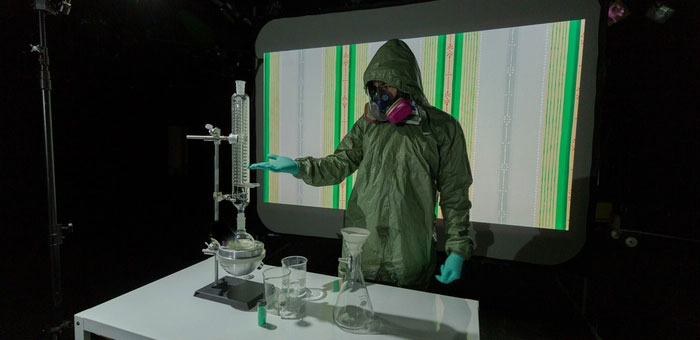
Shadows From The Walls Of Death, printed in 1874, is a remarkable book for two reasons : its rarity and the legend that touching it could kill you. It contains just under a hundred wallpaper samples, each containing a potentially dangerous amount of arsenic.
The book’s origins stem from Kedzie’s research into the harmful effects of arsenic and her desire to shed light on the hidden dangers in seemingly harmless home decor.
With meticulous detail, Kedzie compiled realistic wallpaper samples containing high levels of arsenic and bound them into the pages of a book. Each page was coated with a protective varnish to prevent the toxic substance from spreading.
Although Shadows From The Walls Of Death had the noble purpose of informing the public about the potential dangers associated with arsenic, over time the book became notorious and was considered cursed – a deadly artifact capable of claiming the lives of anyone who dared to read it.

Although arsenic is a deadly poison, it can be mixed with copper to create beautiful paints and pigments, most commonly Scheele’s Green or Paris Green .
Haunting effect
The stories surrounding Shadows From The Walls Of Death revolve around the belief that contact with the pages of the book can be deadly. The wallpaper patterns containing arsenic from the book are said to release toxic fumes, causing serious health complications for anyone who comes into contact with them.
It was believed that simply opening the book or inhaling the scent from its pages could lead to illness, respiratory problems, or even death.
There are numerous accounts of readers experiencing sudden illnesses, strange symptoms, and unexplained deaths after reading Shadows From The Walls Of Death. These stories, while unverifiable, have contributed to the book’s haunting reputation.

Two copies of this extraordinary book were sent to Harvard Medical School and the U.S. National Library of Medicine, where they were fully digitized.
However, it is important to approach these stories with skepticism. The scientific community is still widely debating the book’s actual lethality.
Although arsenic is undeniably toxic, the concentrations found in the book’s wallpaper samples may not pose an immediate threat to readers . However, the fear associated with Shadows From The Walls Of Death persists, enveloping it in an atmosphere of foreboding and caution.
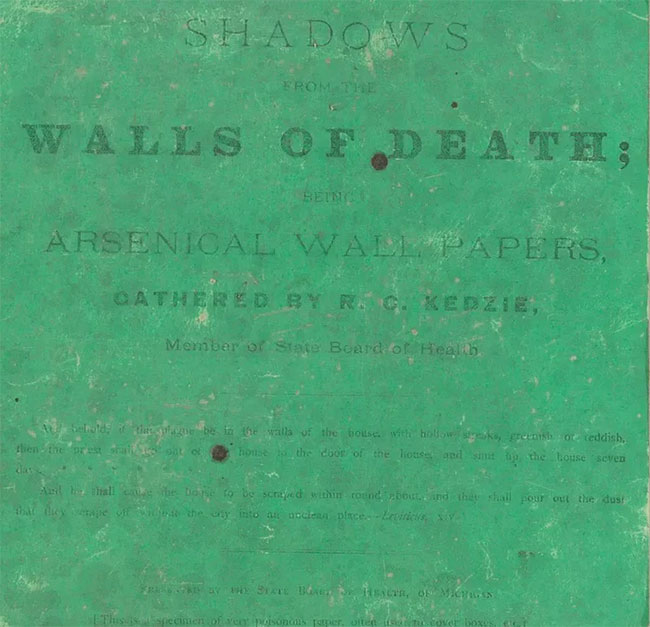
Original cover of Shadows From The Walls Of Death.
Despite the inherent risks, Shadows From The Walls Of Death has become a coveted item for collectors, rare book enthusiasts, and those drawn to the macabre.
The allure of owning such a rare and infamous book, coupled with the suspense, has made many people eager to acquire it. Consequently, copies of the book have been published and sold at high prices on the antiques market.
Furthermore, Shadows From The Walls Of Death has become a cultural icon, appearing in fields such as horror literature, folklore, and popular culture. It has inspired works of fiction and has been referenced in films, television shows, and music.

Due to the dangerous amount of arsenic in the work, only 5 of the original 100 copies still exist today. Most copies have been destroyed by libraries in the past.
Separate fact from fiction.
Legends surrounding Shadows From The Walls Of Death have persisted for decades, but it’s essential to separate fact from fiction. While the book does contain actual arsenic-containing wallpaper samples, the actual risks associated with reading it remain a subject of debate. The scientific community emphasizes that proper handling and precautions can minimize any potential harm.
The story of Shadows From The Walls Of Death serves as a cautionary tale, reminding us of the dangers that once lurked in seemingly harmless aspects of our daily lives. It represents a historical artifact that sheds light on the use of hazardous materials and the importance of prudent choices in design and manufacturing.